QUICK MENU
Archives
-
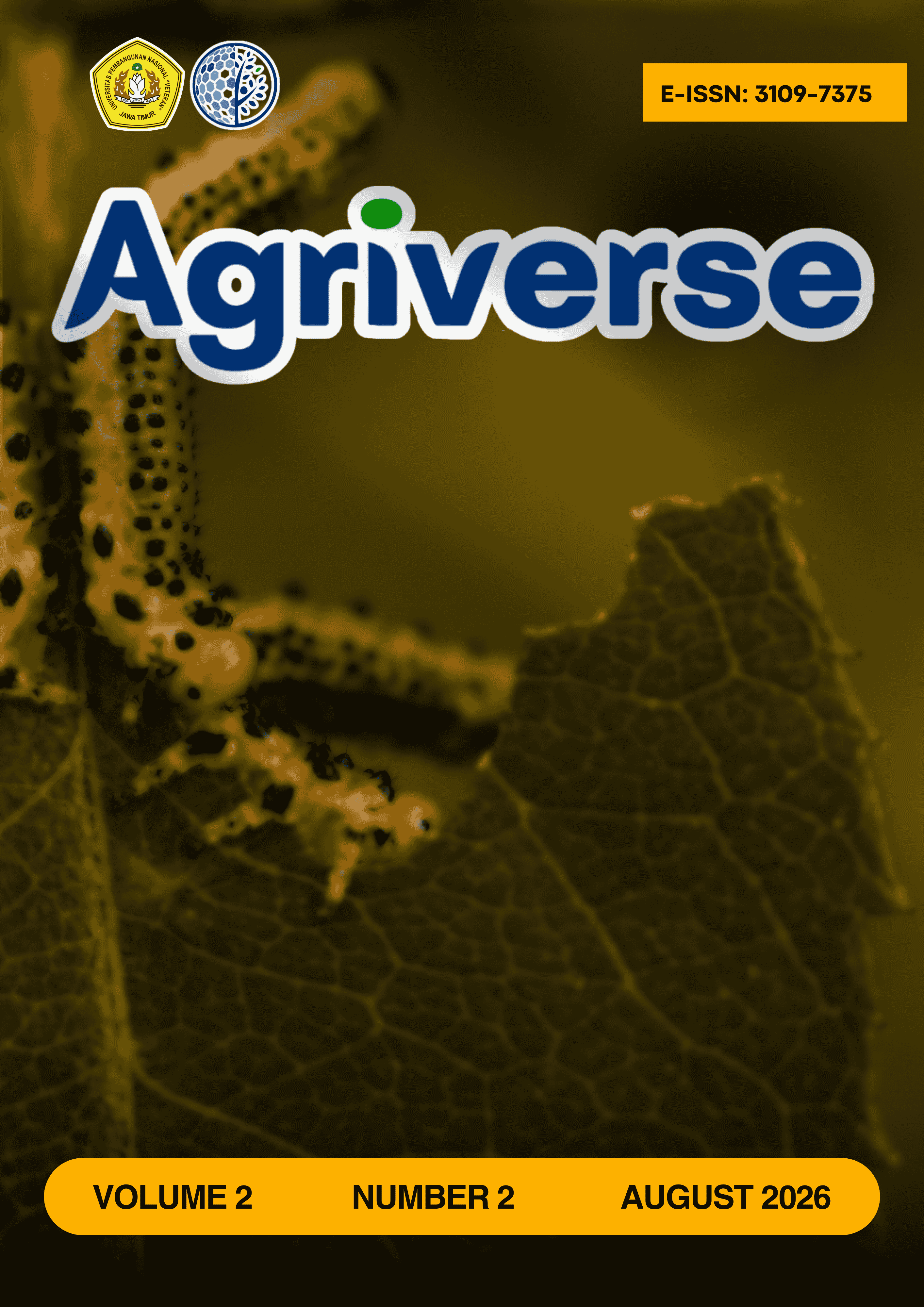
Vol. 2 No. 2 (2026)
The articles in this issue were authored/co-authored by authors Indonesia, Thailand, Italy
-
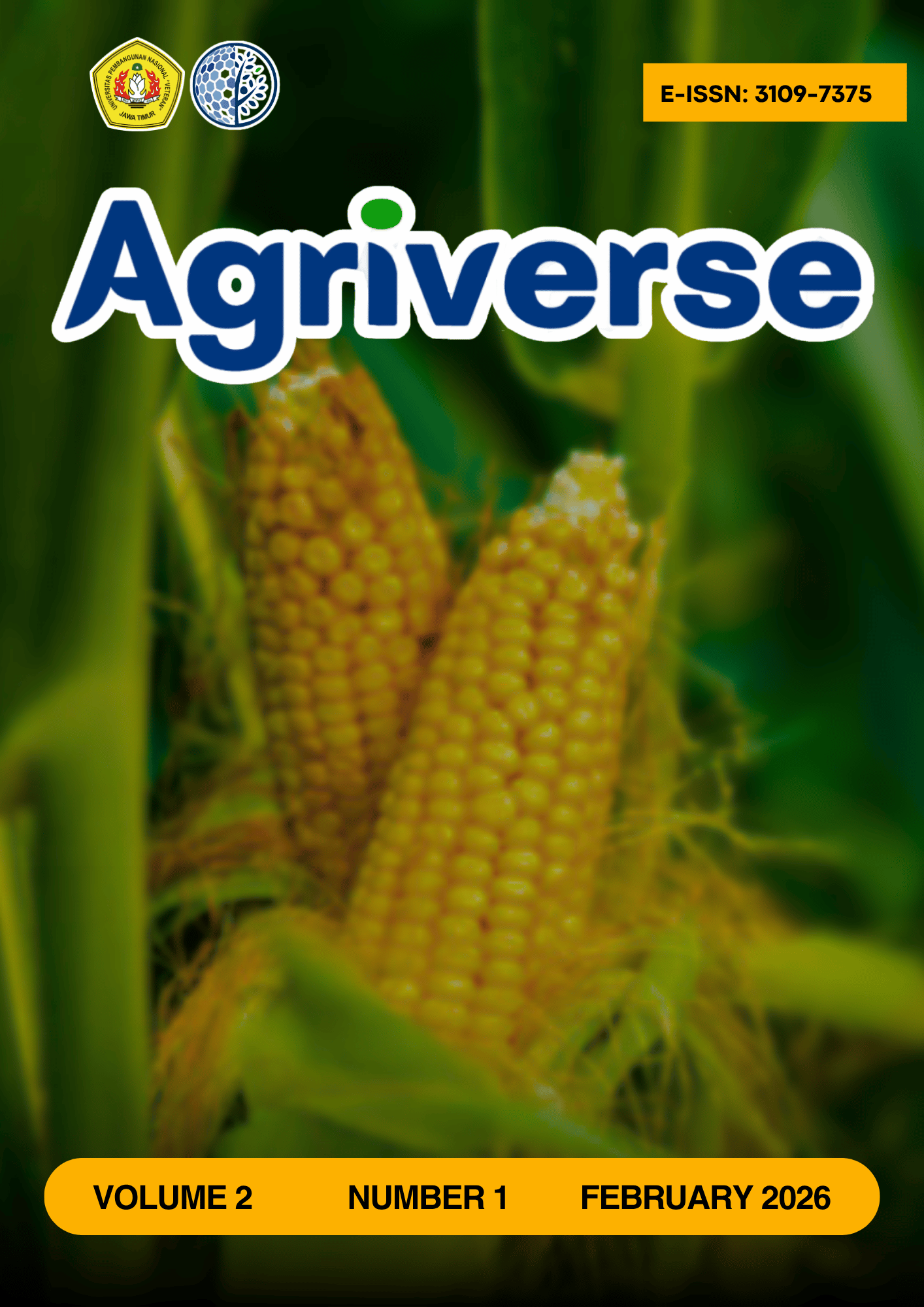
Vol. 2 No. 1 (2026)
This issue highlights a selection of studies addressing key challenges in crop production, agroecosystem management, and land sustainability in support of the Sustainable Development Goals (SDGs). The articles focus on improving crop productivity through optimized nitrogen management and planting strategies, examining pest distribution in agroforestry systems for ecological pest control, and assessing soil conservation through erosion and sediment analysis. Collectively, these contributions support SDG 2, SDG 12, SDG 13, and SDG 15, advancing practical solutions for resilient and sustainable agricultural systems.
The articles in this issue were authored/co-authored by authors Indonesia, Taiwan, India, Sudan
-
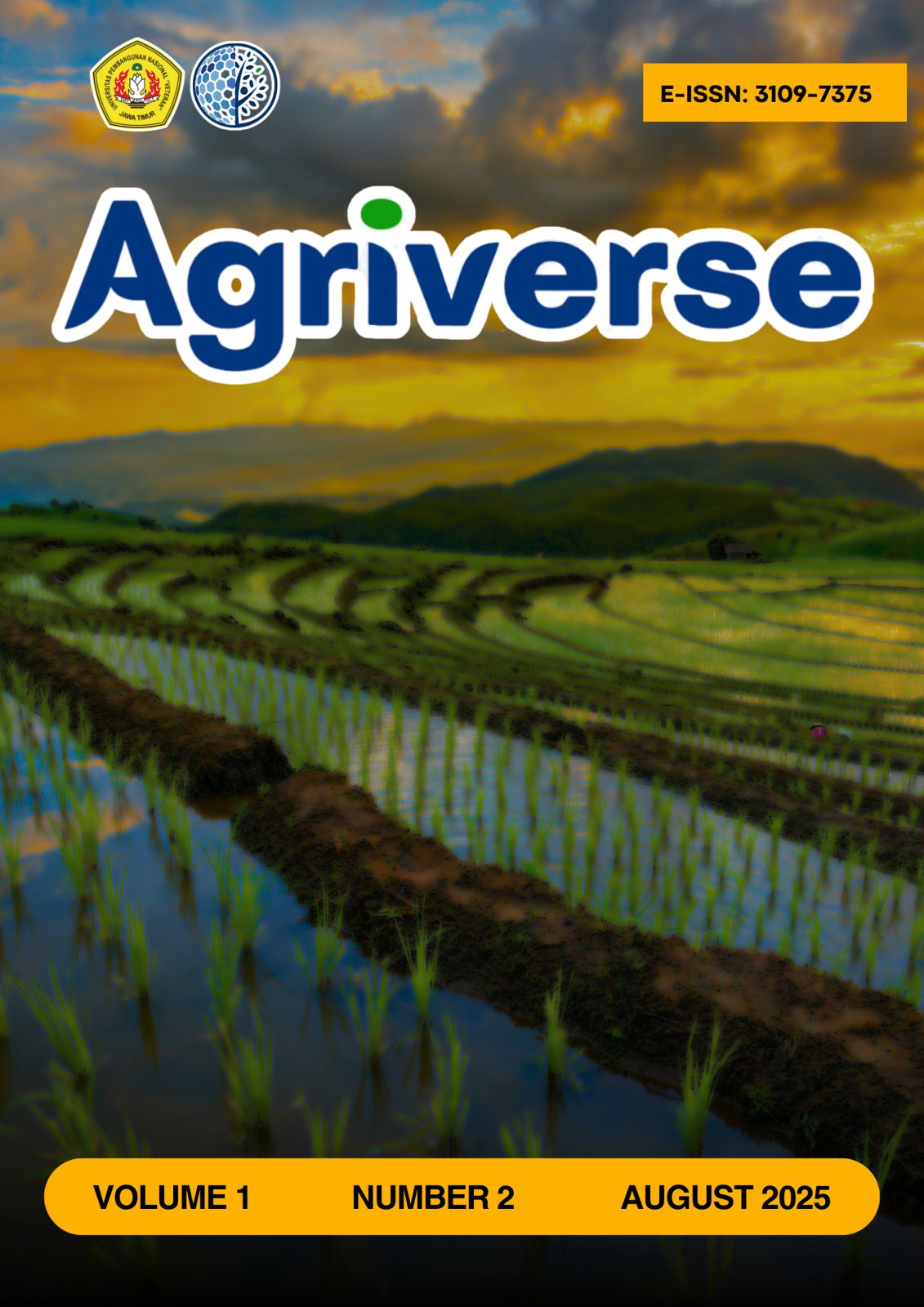
Vol. 1 No. 2 (2025)
This issue highlights the integration of ecological sustainability and agribusiness strategies to strengthen resilient agricultural systems, including the functional role of weeds in sugarcane agroecosystems and the use of biological control for rice ear bugs (Leptocorisa oratorius F.) to reduce chemical dependency. It also examines sustainable agribusiness development through SWOT-based strategies in oyster mushroom enterprises and the role of human resource management, human capital, and innovation in enhancing competitiveness in the ornamental plant sector. Overall, the studies contribute to key SDGs—particularly SDG 2, SDG 8, SDG 12, and SDG 13—by offering actionable insights that integrate ecological, economic, and institutional dimensions.
The articles in this issue were authored/co-authored by authors Indonesia, Taiwan, Malaysia, and Sudan
-

Vol. 1 No. 1 (2025)
This issue highlights critical themes in agribusiness and climate resilience, featuring studies on milkfish aquaculture development strategies and coffee farmers’ awareness of climate change as key drivers of adaptive agricultural practices. It also addresses sustainable agriculture through analyses of pest and disease challenges in oil palm seedlings, soil erosion risk modeling using NDSI in coffee farming, and innovative soil fertility management via biopore infiltration holes with compost. Collectively, these contributions support the achievement of SDGs 2, 12, 13, and 15 by advancing agricultural resilience, environmental sustainability, and resource optimization, offering practical insights for policy development and implementation in agribusiness and environmental conservation.
The articles in this issue were authored/co-authored by authors Indonesia, Thailand, Malaysia, and Taiwan